If you’ve looked at website change monitoring tools recently, you’ve probably noticed a new option showing up everywhere: AI-powered detection. It’s positioned as the smarter, more capable alternative to traditional content or visual monitoring. So is it actually better, or is it the same thing with a trendier label?
The honest answer is that they’re genuinely different, and each has real strengths. The right choice comes down to what you’re actually trying to catch.
Here’s a plain-language breakdown of how each type works, what it’s good at, and how to decide which one fits your situation, with data from how ChangeTower’s own users are actually choosing.
First: how does website change monitoring work?
At its core, website monitoring is a simple idea. A tool visits a URL on a schedule, compares what it finds now to what it found last time, and alerts you when something is different.
The complexity, and the meaningful differences between approaches, lie in how that comparison is made. What counts as a “change”? What gets ignored as noise? What requires a notification?
There are three main approaches in use today.
Content monitoring: the foundational approach
Content monitoring compares the raw content of a page against a previous version. This can include the text on the page, the HTML structure, the visual layout, images, and links.
When something on the page is different, such as a changed word, a new paragraph, or a swapped image, a content monitor catches it.
What content monitoring is good at
- Catching specific, concrete changes, like a removed phrase, an updated price, or a CTA button that changed color
- Monitoring pages where the signal is in the specific wording, such as legal pages, terms, and pricing
- Low noise when the page itself is relatively stable
- Full transparency, since you see exactly what changed, pixel by pixel or character by character
Where content monitoring struggles
- High-traffic or dynamic pages that change constantly (ad rotations, timestamps, and personalized content all count as a “change”)
- Pages where you care about what a change means more than the simple fact that something is different
- Separating signal from noise when a page has lots of irrelevant updates
Some of that noise can be reduced with selective monitoring, which limits a monitor to the part of the page you actually care about.
AI monitoring: understanding what a change means
AI-powered monitoring adds a layer of interpretation on top of the raw comparison. Beyond detecting that something changed, it attempts to understand what changed and whether it matters.
This means two things in practice.
Noise reduction: AI monitoring can distinguish between a meaningful content update (a competitor changed their pricing) and irrelevant dynamic content (a cookie banner appeared, or an ad refreshed). You get alerted on the changes that matter, and the pixel shifts stay out of your inbox.
Semantic understanding: AI detection understands context. It can recognize that “we now offer three pricing tiers” and “we’ve simplified our plans into three options” describe the same change, even though the wording is different. It tracks the meaning behind the words, so a simple rewording won’t throw it off.
What AI monitoring is good at
- Dynamic, busy pages where content monitoring would create constant noise
- Pages where you care about the substance of changes more than every minor update
- Competitor and market intelligence, where semantic understanding beats string matching
- Summarizing what changed, along with flagging that something changed
Where AI monitoring has tradeoffs
- Less precision for exact-match use cases (if you need to catch a specific phrase change, content monitoring is more literal and reliable)
- It’s interpretive, which means it can occasionally miss something a human would flag as significant, or flag something you’d consider minor
Keyword monitoring: the lightweight third option
A third approach, less discussed but useful in specific situations, is keyword monitoring. Rather than comparing the full page, keyword monitoring watches for the presence or absence of specific terms or phrases.
This is a targeted, lightweight approach. You tell the monitor “alert me if this word appears on this page” or “alert me if this phrase disappears.” It tracks only the signal you define.
What keyword monitoring is good at
- Watching for a specific announcement, such as a product name, an executive’s name, or a policy term
- Monitoring whether a page still contains required legal language
- Tracking whether a competitor mentions your brand or a key term
- Very high signal-to-noise ratio, since you’re only alerted when your exact term changes
Where keyword monitoring is limited
- It misses everything outside your defined terms, so you need to know in advance what you’re looking for
- It’s a poor fit for open-ended monitoring where you want to catch anything that changes
How ChangeTower users actually choose
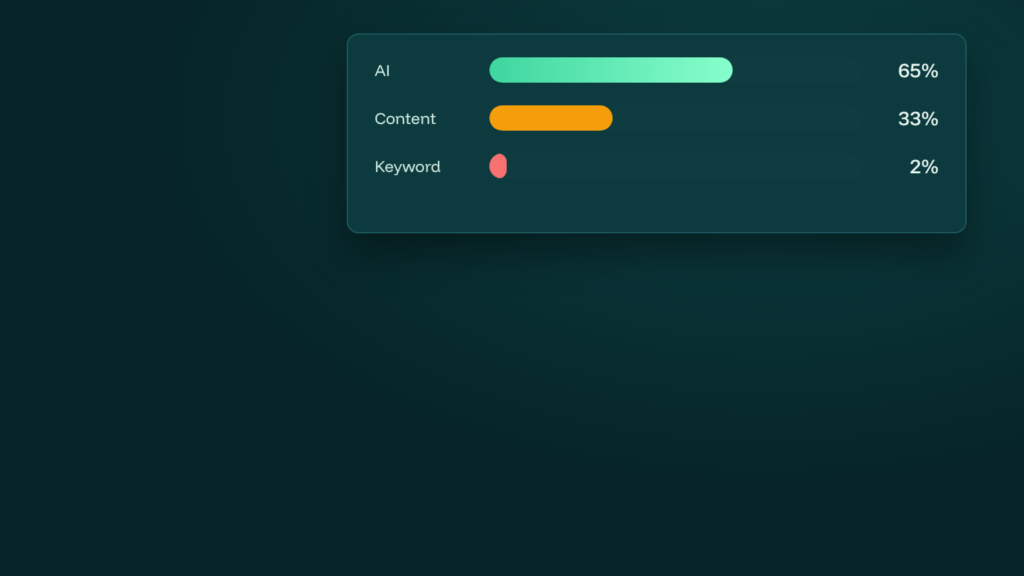
When we look at how monitors are created across our user base, the breakdown is striking:
- 65% of monitors use AI detection
- 33% use content monitoring
- 2% use keyword monitoring
AI monitoring has become the dominant choice, created at roughly twice the rate of content monitoring across the past 90 days. This tracks with broader trends. As AI detection has become more reliable and more accessible, users are defaulting to it for the noise reduction and semantic understanding it provides.
That said, content monitoring remains meaningfully popular, even with AI detection readily available, because there are real use cases where you want the literal, precise comparison it gives you.
A practical guide: which one to use
Use this as a starting point. Many users run a mix, so treat these as defaults you can adjust.
| Situation | Recommended approach |
|---|---|
| Competitor pricing and positioning pages | AI monitoring |
| Legal pages, terms of service, compliance docs | Content monitoring (you want exact changes) |
| Dynamic news or blog pages | AI monitoring (filters noise) |
| Watching for one specific term or phrase | Keyword monitoring |
| Competitor product pages (looking for new features) | AI monitoring |
| Your own published pages (catching unauthorized edits) | Content monitoring |
| Vendor status pages | Content monitoring or keyword |
| Broad market surveillance across many pages | AI monitoring |
| Contract or policy language verification | Content or keyword monitoring |
A common setup for professional users: AI monitoring for open-ended competitive and market intelligence, content monitoring for pages where exactness matters (legal, pricing, your own site), and keyword monitoring for specific signals you’ve defined in advance.
The case for starting with AI
If you’re setting up website monitoring for the first time and aren’t sure where to start, AI monitoring is usually the better default. Here’s why.
It’s more forgiving. You don’t need to perfectly configure what counts as a change. The AI makes judgment calls about significance that a raw comparison tool would leave to you.
It scales better. As you add more monitors, the noise from content monitoring compounds. AI detection keeps your alerts meaningful even at scale.
It tells you more. A content monitor tells you something changed. An AI monitor can tell you what changed, with a summary, which means you can triage your alerts without visiting every page.
The case for keeping content monitoring
Content monitoring still has an important place in a modern setup, and for several use cases it’s the right tool.
When you need an audit trail. Content monitoring provides a precise, verifiable record of what changed. For compliance and legal purposes, that specificity matters.
When you’re watching your own pages. If you’re monitoring your own published content for unauthorized or accidental edits, you want to know about every change, including the small ones an AI might rate as minor.
When you’ve defined the signal. If you know exactly what change you’re looking for, content monitoring’s literal comparison works in your favor.
Bottom line
AI monitoring and content monitoring each handle a different kind of uncertainty:
- Content monitoring is for when you know exactly what you’re watching for and want a precise record of every change.
- AI monitoring is for when you need to watch a lot of pages for meaningful changes without drowning in noise.
- Keyword monitoring is for when your signal is a specific term and everything else is irrelevant.
Most serious monitoring setups use more than one. The useful question is which approach fits the specific page, the specific signal, and the specific stakes.
Set up your first monitor and choose the detection type that fits your use case. Try ChangeTower free →